
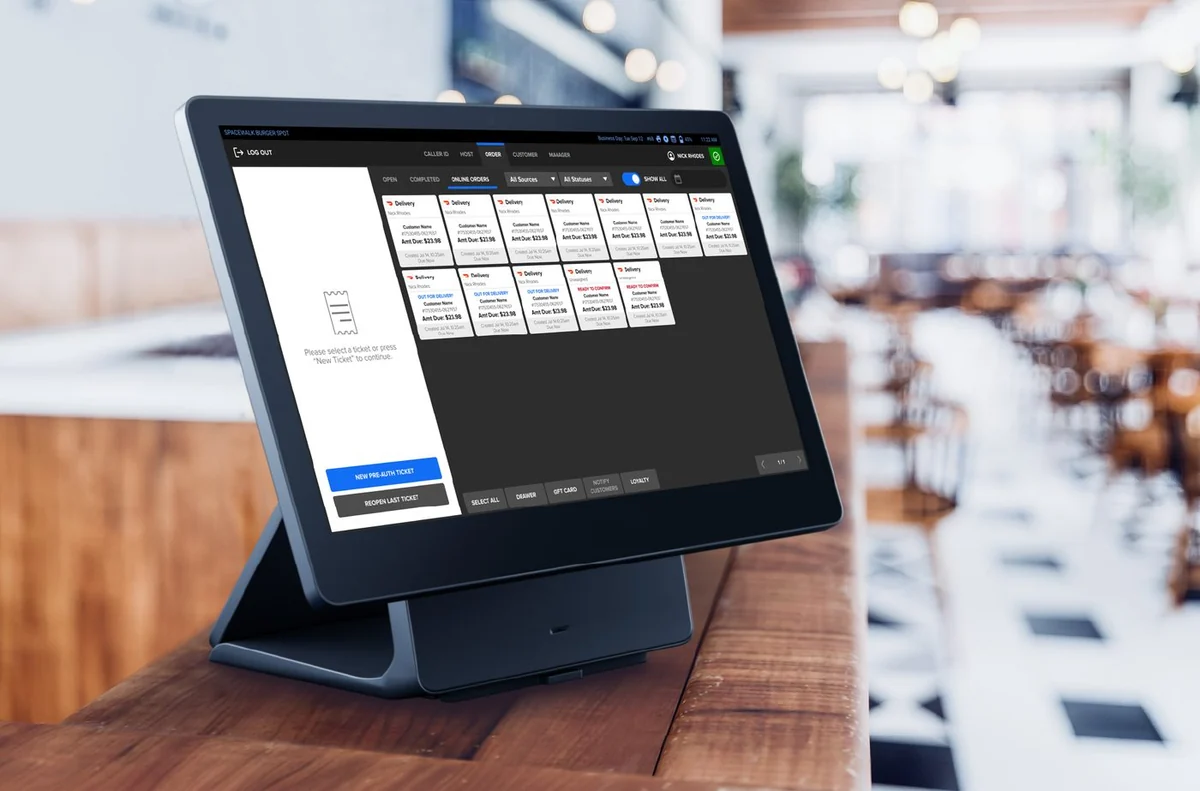
A restaurant till in the UK costs you in three ways: a monthly software fee, the hardware, and the card fees on every payment you take. Independent guides put a typical restaurant's first-year spend somewhere between £2,500 and £8,000 [1]. For a busy venue, though, the card fees can easily cost more than the till itself (there's a worked example below), so that's the number to watch.
Here's how each part works, what the well-known systems charge, and the questions to ask before you sign anything.
The three costs of a restaurant till
1. The software subscription
Most tills now run on a monthly software plan. That's what gives you the menu, table plans, kitchen tickets and end-of-day reports. Some restaurant software plans are free; paid plans and custom quotes depend on the provider and package [2][3]. Free plans exist, and the paid tiers add features, so compare what's included rather than just the headline price.
2. The hardware
Hardware is the screen your staff tap, plus the extras a kitchen needs: a receipt printer, a kitchen printer or screen, and a card machine. Buying it outright typically runs from £500 to £1,500 for a single setup [1]. Some providers rent the hardware to you instead, which spreads the cost but adds to the monthly bill.
3. The card fees
Every time a customer pays by card, you pay a fee. It's usually a percentage of the bill, sometimes with a few pence added per payment. This is the part people underestimate, because it grows with your takings. A quiet month costs less; a great month costs more.
Example: a restaurant takes £30,000 a month on card across 1,200 payments, an average bill of £25. At a flat 1.75% the card fees come to £525 a month. At 0.9% plus 2p per payment they come to £294: £270 in percentage fees plus £24 in per-payment fees. Over a year that's a difference of £2,772, before you've even looked at the software fee.
That's why the headline monthly price of a till rarely tells you what it really costs. Our guide to reading your card machine statement helps you find your current figures; the café card-fee guide shows how smaller bills affect the maths.
What the well-known systems charge
Here are the published restaurant prices from two of the best-known systems, at the time of writing (November 2026). Prices change, so always check the provider's own page.
| System | Monthly plans | In-person card fee |
|---|---|---|
| Square for Restaurants | Free, Plus at £69 per location, Premium on custom pricing [2] | Free and Plus: 1.75%; Premium: custom pricing may be available [2] |
| Lightspeed Restaurant | Ask for a current UK quote covering the plan, hardware and extra registers [3] | Ask for the payment rate in your quote [3] |
Two things to notice. Square's Premium plan is only offered above £200,000 a year in card payments [2]. For Lightspeed, confirm the currency, billing commitment, VAT basis and any extra-register charges in a written UK quote before you compare [3].
The charges that don't make the headline
Card machine and till contracts can carry extra charges that never appear in the advert. One payments guide lists the most common ones [4]:
- Monthly minimum charge: £20 to £40 a month, depending on turnover [4].
- PCI-DSS compliance fee: up to £250 a year for card-security compliance [4].
- Authorisation fee: 1p to 3p on every single payment [4].
- Setup fee: up to £150 [4].
- Early termination: up to £1,200 to leave a contract early [4].
- Chargebacks: up to £30 each when a customer disputes a payment [4]. Our restaurant chargeback guide covers how to respond.
Not every contract has all of these. But if a quote doesn't mention them, ask in writing whether they exist.
Can you pass card fees on to customers?
For most customers, no. Since 13 January 2018 it has been unlawful in the UK to charge customers extra for paying with a consumer debit or credit card [5][6]. That covers card-like methods such as PayPal too [6]. The ban doesn't apply to commercial or corporate cards [6], so it only helps when a customer pays on a business card.
So the fees come out of your margin, which is why getting them right matters so much in hospitality.
Before you sign, take our restaurant POS demo checklist to every supplier demo.
Where Shift4 Dine fits
If you want a full till rather than just a card machine, Shift4 Dine is the system TrustPOS installs. Here's exactly what it costs:
- £39 a month plus VAT for the full till system.
- 0.9% plus 2p authorisation per transaction.
- Next-day payments.
- We install it on-site with your menu already loaded when it arrives.
- 12-month agreement. Leaving early costs the monthly rental for each month remaining, so we'll walk you through that before you sign.
Whether it works out cheaper for you depends on what you pay today, how many payments you take and your average bill. The only way to know is to compare it against your real figures.
Before you sign: a quick checklist
- Work out your real card fees. Use last month's card takings and number of payments, not a guess.
- Ask for every fee in writing, including minimum charges, compliance fees and per-payment fees.
- Check the contract length and exit costs. Know what leaving early would cost.
- Ask who sets it up. Find out who loads the menu, who installs the kit, and what support you get when it goes wrong on a Friday night.
- Compare the total monthly cost, not the headline price.
Before comparing a quote, gather the figures using our merchant statement guide. If you are replacing an existing setup, use the provider-switching checklist to check separate terminal and processing agreements.
Sources
- ExpertSure: EPOS system costs UK, prices verified October 2026, checked 16 October 2026
- Square for Restaurants pricing (UK), checked 16 October 2026
- Lightspeed Restaurant pricing (UK), checked 16 October 2026
- Mobile Transaction: card machine charges explained, published 8 April 2025, checked 16 October 2026
- GOV.UK: card surcharge ban means no more nasty surprises for shoppers, HM Treasury, 13 January 2018, checked 16 October 2026
- Business Companion: payment surcharges, Trading Standards guidance, last reviewed April 2025, checked 16 October 2026
This guide is general information, not financial advice. Any saving depends on your current charges, card mix and final terms.